
Starbrew Cafe: Mystical Merge
Extra Dimension Games Inc.Puzzle
4.71.35K Reviews
- Version
- 1.80.0
- Installs
- 100.00K
- Age Rating
- Teen
Screenshots


Our Review of Starbrew Cafe: Mystical Merge
 Analysis by Appyee
Starbrew Cafe: Mystical Merge is a puzzle game from Extra Dimension Games Inc. that puts its cozy fantasy setting ahead of frantic action. I spent time with it as the sort of game you open for a few minutes between errands, then return to when you want a gentler project to work through. Its central appeal is easy to understand: you restore a magical world while solving merge-based puzzles, with the cafe theme giving those small decisions a pleasant sense of purpose.
That combination makes it more approachable than a puzzle game built only around scores or increasingly difficult boards. You are not simply matching pieces and moving on. The surrounding restoration idea gives each session a little context, even when the immediate task is modest. I found that especially useful during short breaks, because there was usually a clear next step without requiring the kind of concentration demanded by a long strategy game.
How the cafe turns merging into a longer journey
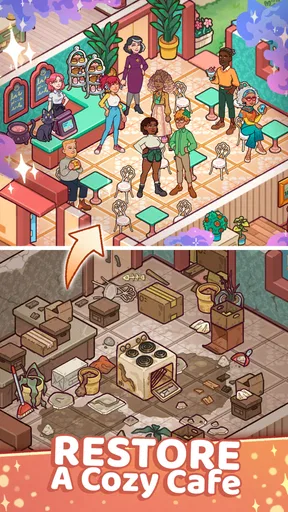
The game belongs firmly in the puzzle category, but its presentation gives the familiar merge formula a softer identity. The store summary describes the goal as restoring a cute world full of magic, and that theme is important to the experience rather than being a disposable coat of paint. The cafe setting makes progress feel like rebuilding a place with character, not just clearing an endless sequence of identical challenges.
My preferred way to play was in small sessions. I would check what needed attention, combine the available pieces, and stop once the immediate space became crowded or the next objective required more preparation. That rhythm suits people who enjoy gradual improvement. It is less suitable if you want a puzzle game that gives you a complete, self-contained challenge every few minutes and then resets cleanly.
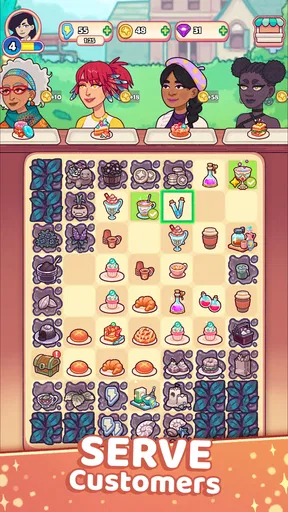
A useful habit is to avoid merging everything the moment it appears. Keeping a little variety on the board can be more practical than creating one larger item immediately, because a future objective may depend on having several lower-level pieces available. This is one of the less obvious adjustments new players often need to make: the biggest merge is not automatically the best merge. I got better results when I treated the board as a small workspace rather than a collection of objects waiting to be combined.
That approach also makes the cafe restoration feel more deliberate. Instead of tapping through tasks without thinking, I began grouping similar pieces and leaving room for unexpected requests. The game is still accessible, but it rewards a modest amount of planning. Players who enjoy organizing limited space will probably find more satisfaction here than players who want purely reflexive matching.
What makes the progression comfortable, and what can make it tiring
The most appealing part of the progression is its sense of accumulation. A small action contributes to a broader restoration goal, so even an ordinary session can feel worthwhile. I liked being able to return after a pause and immediately understand what I had been working toward. That clarity matters in a mobile game, where interruptions are normal.
The trade-off is that a long-term restoration structure can make progress feel less immediate. If you prefer rapid unlocks, constant novelty, or a clearly defined ending to each play session, this may seem slow. The game works best when you accept that the cafe and its magical surroundings are projects to revisit, not puzzles to finish in one sitting.
Board management becomes more important as your collection grows. A practical routine is to complete the easiest current objective first, then use the remaining space to prepare for the next one. I also found it helpful to pause before spending any scarce-looking resource, especially when the board was already busy. That small delay prevents an impulsive choice from creating more clutter and keeps the session focused on a useful goal.
This is also where the game can create pressure. A player who wants to keep every possibility open may hesitate too much, while a player who merges aggressively may discover that a useful lower-level item is no longer available. The tension is mild, but it is real. Starbrew Cafe is more enjoyable when you make a plan and accept that not every move has to be perfect.
Spending, free access, and the questions I would ask before playing
The game is free to download, and its listed in-app purchases range from $0.99 to $149.99 per item. That wide range is the most important purchase detail for a prospective player. It tells me that the free starting point is clear, but it also means I would approach optional spending carefully rather than treating every offer as automatically good value.
I would begin without buying anything and learn the normal rhythm of the game first. That gives you a much better basis for judging whether a purchase solves a genuine annoyance or simply speeds up a process you were already enjoying. In a merge game, the difference matters: paying to remove a temporary inconvenience can feel very different from paying because the basic experience has become unusable.
The purchase information alone does not establish that spending is required to progress, so I would not claim that it is. My practical advice is to set a personal limit before starting, particularly if the game is going on a shared device. The upper end of the listed range is substantial enough that casual tapping through purchase prompts deserves more attention than it would in a game with only small optional items.
Parents should also note the Teen content rating. That rating does not tell me that the game is unsuitable for every younger player, but it does mean I would check the store controls and device purchase settings before handing it over. The same advice applies to anyone who wants a strictly no-spend experience: disable or protect purchases first, then enjoy the free portion without making decisions in the middle of a busy session.
One everyday use case is a short commute or a quiet coffee break. I would open the game, inspect the current objective, make a few careful merges, and close it before the board became difficult to manage. Another is winding down at home: the restoration theme is calmer than a competitive puzzle match, and there is no need to coordinate with other players. If you need something for a long offline trip, however, I would first make sure its normal play pattern suits you, because this is designed around returning to an ongoing world rather than finishing a fixed campaign in one journey.
Is the game fair for players who do not want to spend?
For me, fairness here is less about whether the game contains purchases and more about whether a free player can make sensible progress without feeling pushed into them. The verified purchase range confirms that optional spending exists, but it does not prove that purchases are necessary, nor does it provide enough information to promise that every later stage feels equally generous. I would therefore describe the game as approachable for a no-spend trial, while keeping expectations measured about the longer journey.
The best way to protect that experience is to play with a clear stopping rule. If an objective becomes inconvenient, I would leave it for the next session instead of paying immediately. I would also avoid buying simply because the board feels untidy; careful organization usually deserves a chance first. This is a concrete advantage of the game’s slower format: you can step away, rethink your arrangement, and return without turning every obstacle into an urgent decision.
Compared with a traditional match-three game, the emphasis is different. Match-three alternatives usually offer compact rounds, quick feedback, and a more obvious score-based challenge. Starbrew Cafe asks for longer-term attention to a growing collection and a themed restoration. Compared with a pure merge sandbox, it has a stronger sense of destination because the cafe and magical world give your actions a narrative frame. I would choose it over those alternatives when I want a persistent project; I would choose a conventional level-based puzzler when I want a clean win or loss before putting my phone away.
There is also a fairness trade-off in the way each style handles mistakes. A short puzzle round lets you start fresh quickly, while a persistent merge board makes poor organization linger. That is not necessarily unfair, but it changes the kind of player who will feel comfortable. People who enjoy arranging, waiting, and revisiting a plan may see depth in that persistence. People who dislike clutter or delayed progress may experience the same structure as pressure.
What remains important to check during a real trial
I would pay attention to three things during the first several sessions. First, notice whether the free progression gives you enough meaningful tasks to stay engaged. Second, watch how often you feel tempted to spend rather than simply wanting to spend. Third, see whether the board-management decisions remain enjoyable after the novelty of the cafe setting settles. Those observations are more useful than judging the game from its opening minutes alone.
I would also check how the current version behaves on your device. The listed current version is 1.80.0, and the minimum operating-system requirement is Android 7.1. That makes it accessible to a broad range of Android phones, but compatibility on paper is not the same as comfort in daily use. Older hardware may make any busy, long-running mobile game less pleasant, so I would give it a short test before committing time or money.
The game has reached over 100 thousand installs, with a 4.7 average from around 18 thousand ratings and roughly 1.4 thousand written reviews. Those figures suggest that the concept has found a receptive audience, but they should not replace your own trial. A high average can tell you that many players like the overall experience; it cannot tell you whether you personally enjoy the pace, the amount of board organization, or the way optional purchases fit into your routine.
There are also reasonable unknowns that I would keep in mind without filling them with assumptions. The purchase range is visible, but the value of individual items depends on how you play and what the game presents at the moment. Likewise, a store rating cannot predict how the later progression will feel to a patient free player. I prefer to treat those as reasons for a cautious trial, not as evidence either for or against the game.
Who should download it, and who should skip it
I would recommend Starbrew Cafe to someone who likes cozy fantasy presentation, gradual restoration, and puzzle decisions that continue across many short sessions. It is a particularly good fit if you enjoy organizing a limited board, preparing for future objectives, and seeing small actions contribute to a larger setting. The free entry point makes it easy to test that style before deciding whether it deserves a permanent place on your phone.
I would be more hesitant to recommend it to players who want fast rounds, strict competitive scoring, or a complete sense of closure every time they play. It is also not my first choice for anyone who knows they are vulnerable to impulse purchases in free-to-play games. The listed purchase ceiling makes basic device safeguards and a firm personal budget sensible, even if you ultimately spend nothing.
Players looking for a demanding logic game should understand that the appeal is not only in solving a difficult puzzle. The charm comes from combining planning with atmosphere and persistence. If you want dense deduction, timed reactions, or head-to-head competition, another puzzle style will probably serve you better. If you want a quiet magical project that can be picked up and left down, this one has a clearer reason to exist than many interchangeable merge games.
Extra Dimension Games Inc. has built the experience around an inviting idea, and I think that idea carries the game through its slower moments. The cafe gives the merging a destination, while the restoration theme makes routine progress feel more personal. Still, I would not rush into purchases, and I would not pretend that the extended progression will satisfy everyone. The right question is whether you enjoy nurturing a board over time.
My final verdict is positive but measured: Starbrew Cafe: Mystical Merge is worth trying free before you decide how seriously to take it. I enjoyed its relaxed puzzle rhythm, its magical restoration frame, and the small strategic choices involved in keeping the board useful. I would recommend it to a friend who wants a gentle, ongoing mobile game, with one condition: play patiently, protect your spending, and leave it behind if the gradual pace starts feeling like pressure instead of comfort.
Verdict
Strengths of Starbrew Cafe: Mystical Merge
- Relaxed merge gameplay that is easy to learn and play in short sessions.
- Charming café setting with colorful characters and magical visual effects.
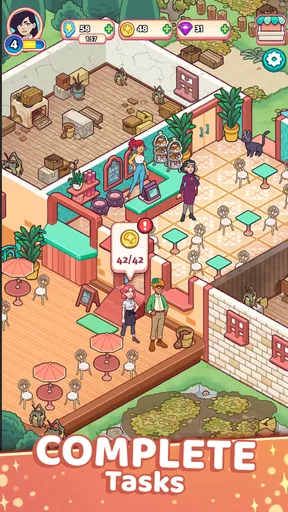
- Story quests give clear goals beyond simply merging items.
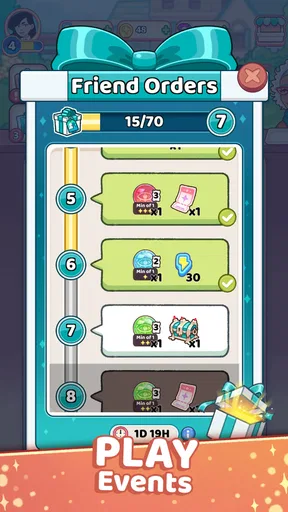
- Regular events can add variety and provide extra rewards.
- Works well for players who enjoy decorating and gradually expanding locations.
Limitations of Starbrew Cafe: Mystical Merge
- Energy limits can interrupt progress during longer play sessions.
- Some upgrades and purchases may require considerable resource grinding.
- The merge board can become crowded and difficult to organize.
- Event objectives may feel demanding without frequent play or spending.
- Progress may slow noticeably after the early stages of the game.
Similar Picks in This Category
View All
Block Blast!
HungryStudio4.8

Braindom: Brain Games Test
Lahana Game Studio4.6

AMAZE!
CrazyLabs LTD4.6

Sudoku - Classic Sudoku Puzzle
Oakever Games4.7

Art Puzzle - Puzzle Games
Easybrain4.8

Amaze GO!
Oakever Games4.9
Frequently Asked Questions
What is Starbrew Cafe: Mystical Merge about?
Starbrew Cafe: Mystical Merge is a casual puzzle and management game that combines merge mechanics with a magical café story. You merge matching ingredients and objects to create upgraded items, then use them to prepare recipes, serve customers, and improve the café. The game also includes character interactions, quests, and a fantasy-themed progression system that gives the usual merge gameplay a more narrative-driven structure.
How does the merging system work in Starbrew Cafe: Mystical Merge?
The main gameplay revolves around combining three or more identical items on the board. Merging ingredients produces more advanced materials, which can be used to complete orders and unlock new recipes or café improvements. Energy and board space are important, so it is better to plan combinations instead of merging everything immediately. Players who organize the board carefully can make progress more efficiently and avoid running out of useful space.
Can Starbrew Cafe: Mystical Merge be played without spending money?
Yes, the game can generally be played without making purchases. Progress is supported through regular gameplay, completed tasks, rewards, and event activities. However, optional in-app purchases may provide extra energy, currency, boosters, or faster access to certain resources. Free players may need to wait for energy to refill and manage their resources more carefully, but the core merging and café-building experience remains accessible without paying.
Does Starbrew Cafe: Mystical Merge require an internet connection?
An internet connection may be needed for some features, including downloading game data, synchronizing progress, accessing limited-time events, viewing advertisements, and processing purchases. Basic gameplay availability can depend on the version installed and the device being used, so it should not be treated as a fully offline game. For the most reliable experience, launch the game while connected to Wi-Fi or mobile data.
Is Starbrew Cafe: Mystical Merge suitable for children?
Starbrew Cafe: Mystical Merge is designed as a light, colorful game with simple controls and fantasy storytelling, making it approachable for many younger players. Nevertheless, parents should review the age rating and privacy information for their region because the game may include advertisements, optional purchases, online features, or links to external services. If children play, parental purchase controls are recommended to prevent accidental spending.
Play our best games!


